The Complete Guide to Shockwave Therapy: How It Works, Who It’s For, and When It Outperforms Traditional Treatments
If you’ve been told to “just rest it,” “stretch more,” or “take anti-inflammatories,” but your pain keeps coming back you’re not alone.
Chronic tendon pain, plantar fasciitis, shoulder issues, hip pain, and stubborn soft-tissue injuries often don’t respond to traditional passive care. That’s where shockwave therapy becomes a game changer.
At MVMT MTHD, we don’t chase symptoms. We stimulate healing.
This guide breaks down:
What shockwave therapy actually is
How it works biologically
Who it’s best for
When it outperforms injections or rest
How we combine it with performance physical therapy
What Is Shockwave Therapy?
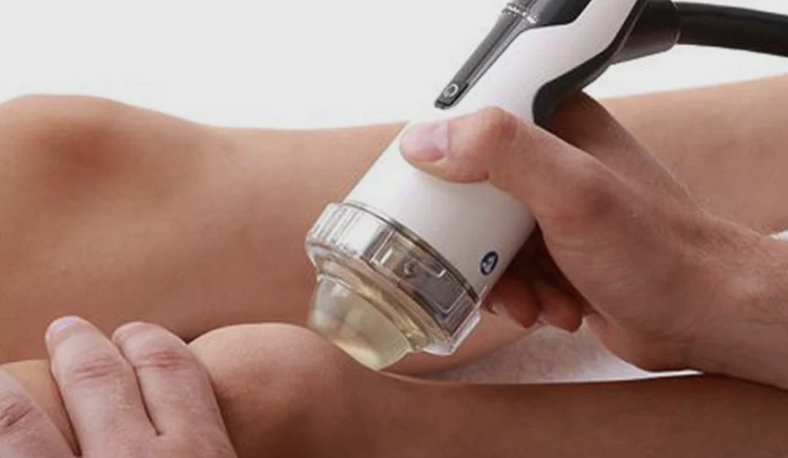
Shockwave therapy (Extracorporeal Shockwave Therapy, or ESWT) is a non-invasive treatment that uses acoustic pressure waves to stimulate tissue repair.
It’s not electrical stimulation.
It’s not ultrasound.
It’s not a massage gun.
Shockwave delivers high-energy mechanical waves into tissue to trigger a controlled healing response in areas that have stalled.
It’s especially effective for:
Chronic tendinopathy (Achilles, patellar, rotator cuff, tennis elbow)
Plantar fasciitis
Gluteal tendinopathy
Hamstring origin pain
Calcific shoulder tendinitis
Chronic muscle trigger points
Delayed bone healing
The Real Problem: Chronic Injuries Aren’t “Inflamed”. They’re Degenerated.
Most chronic tendon pain isn’t inflammatory.
It’s degenerative.
The tissue:
Has poor blood supply
Has disorganized collagen
Has reduced cellular activity
Has stalled in the healing cycle
This is why anti-inflammatories often fail long term. You can suppress symptoms, but you’re not restoring tissue quality.
Shockwave works differently.
How Shockwave Actually Works (The Biology)
Shockwave therapy stimulates healing through:
1. Mechanotransduction
The mechanical waves create microtrauma at a cellular level. This activates repair signaling pathways.
2. Increased Blood Flow
It promotes neovascularization (new blood vessel formation) in poorly vascularized tissue like tendons.
3. Collagen Remodeling
It stimulates fibroblast activity to reorganize and strengthen collagen fibers.
4. Pain Modulation
Shockwave reduces substance P and alters pain signaling in chronic conditions.
5. Calcification Breakdown
In cases like calcific shoulder tendinitis, it helps disrupt calcific deposits.
This is not symptom masking.
This is regenerative stimulation.
When Shockwave Outperforms Traditional Treatment
Shockwave is often more effective than:
Repeated corticosteroid injections
Endless passive modalities
Rest-only approaches
Soft tissue work alone
It shines when:
Pain has lasted 3+ months
Imaging shows tendon degeneration
You’ve plateaued with exercise alone
You want to avoid surgery
Who Is a Good Candidate?
Shockwave works best for:
Active adults
CrossFit athletes
Runners
Lifters
Golfers / tennis players
Surf athletes
People who want to stay active during treatment
It’s ideal when someone wants:
Faster recovery
Long-term resolution
Tissue regeneration instead of suppression
It is NOT typically indicated for:
Acute inflammatory injuries
Nerve root pain
Systemic inflammatory conditions
Pregnancy
What Does Treatment Feel Like?
Honest answer? It’s intense but brief.
Each session lasts about 5–10 minutes per region. Most people describe it as strong pressure or rapid pulsing discomfort. It should not feel sharp or unbearable.
After treatment:
Mild soreness for 24–48 hours is normal
Activity modification may be advised
Progressive loading is essential
Shockwave is not a standalone solution.
The MVMT MTHD Difference: Shockwave + Performance Rehab
Shockwave without progressive loading is incomplete care.
At MVMT MTHD, we combine shockwave with:
Movement assessment
Load management strategy
Strength progression
Mobility where needed
Neuromuscular re-education
Regenerative collaboration when appropriate (PRP, peptides, etc.)
We stimulate the tissue.
Then we teach it how to tolerate load again.
That’s how healing becomes durable.
How Many Sessions Do You Need?
Typical protocol:
3–6 treatments
1x per week
Combined with progressive rehab
Most patients notice improvement within 2–3 sessions, but tissue remodeling continues for weeks.
Is Shockwave Safe?
Yes — when performed properly.
Side effects may include:
Temporary soreness
Redness
Mild bruising
It avoids the risks of:
Steroid-induced tissue weakening
Surgical downtime
Medication side effects
Shockwave vs PRP vs Dry Needling. What’s the Difference?
Dry needling → creates localized inflammatory response
Shockwave → stimulates mechanotransduction & regeneration
PRP → delivers concentrated growth factors
They are not competitors.
They are tools.
The right choice depends on:
Tissue quality
Chronicity
Severity
Imaging findings
Performance demands
At MVMT MTHD, we choose interventions strategically, not generically.
If You’ve Tried Everything…
If you’ve:
Rested
Foam rolled
Injected
Stretched endlessly
“Worked through it”
And it keeps coming back…
It may not need more suppression.
It may need stimulation.
Shockwave therapy can restart healing in tissue that’s been stuck for months sometimes years.